
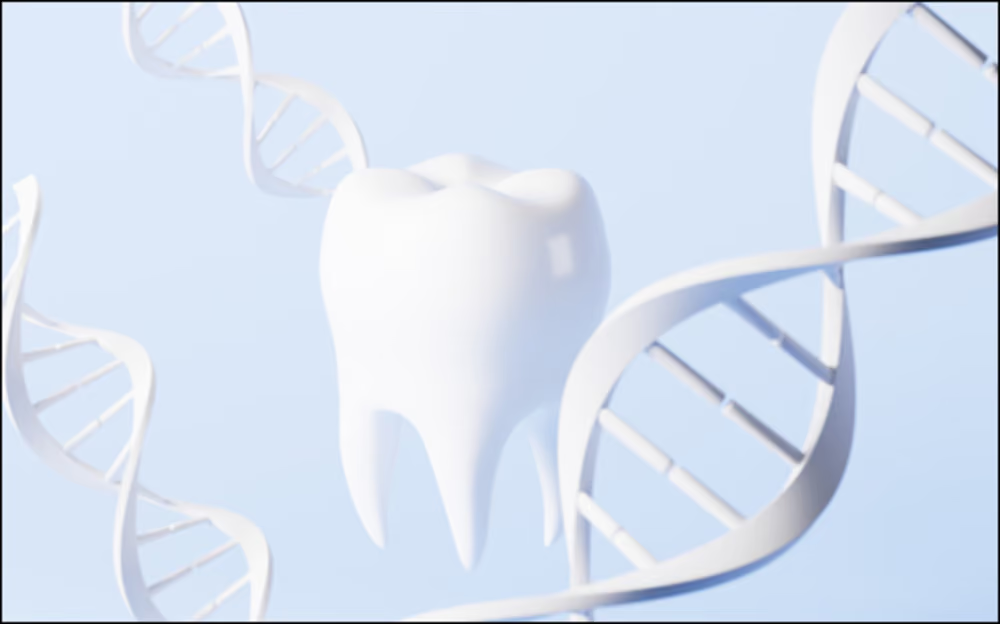
Have you ever wondered why you seem to get cavities more easily than a sibling, or why your smile looks so much like your parents'? The answer, in part, lies in your genes. While the foundation of a healthy smile is always good hygiene, your DNA plays a surprisingly large role in determining your susceptibility to certain dental issues. At Maple Park Dental, we understand that personalized care starts with understanding your unique risks.
Nature vs. Nurture in Dental Health
When it comes to your teeth, it's not a simple case of nature or nurture—it's both. The bacteria in your mouth, your diet, and how often you brush and floss (the nurture factors) are the main drivers of common problems like decay. However, your genetic makeup (the nature factors) sets the stage by influencing the inherent strength and structure of your mouth. Here's how your genes can affect your smile:Tooth Structure and Enamel StrengthYour DNA determines the quality of your dental tissues, which is a major factor in cavity risk.
- Enamel Hardness: Some people are genetically predisposed to having softer or thinner enamel, the hard outer layer of the tooth. Thin enamel is naturally more vulnerable to acid erosion and decay.
- Tooth Shape: Genes dictate the shape of your teeth, including the depth of the grooves and fissures on the chewing surfaces. Deeper grooves can be more difficult to clean, giving bacteria an easy place to hide and cause cavities. This is why we often recommend dental sealants for children—to help cover those hard-to-clean areas.
Malocclusion and Jaw ShapeIf you inherited a need for braces, you can likely thank your parents. The size and shape of your jaw are largely genetic. For example, if you inherit a small jaw from one parent and large teeth from the other, the result is often overcrowding, leading to alignment issues known as malocclusion. Fortunately, genetic predisposition for alignment issues can be corrected with clear aligners like Invisalign, to achieve a straight, beautiful smile regardless of your genetic blueprint.Gum Disease SusceptibilityWhile gum disease (gingivitis and periodontitis) is caused by bacterial plaque, the severity of the disease can be linked to genetics. Certain genetic variations can influence your body's immune response to oral bacteria. If your immune system is genetically wired to have a stronger inflammatory reaction, you may be more susceptible to advanced periodontitis, which can lead to tooth loss.Saliva CompositionSaliva is one of your mouth’s most powerful natural defenses, as it helps wash away food particles and neutralize harmful acids. The chemical makeup and flow rate of your saliva are influenced by your genes. People who naturally produce less saliva, or saliva with a less effective neutralizing capacity, may have a higher risk of developing tooth decay and dry mouth (xerostomia).
Hereditary Conditions
In some cases, genetic factors can lead to rare, distinct conditions that affect oral development.
- Amelogenesis Imperfecta: A disorder that causes defective or missing enamel, resulting in teeth that are often discolored and prone to damage.
- Dentinogenesis Imperfecta: A condition that causes the teeth to be discolored and weaker, making them more susceptible to breakage.
- Hypodontia: The genetic absence of one to five teeth.
Taking Control of Your Genetic Risk
You can’t change your genes, but you can absolutely change your outcome! Knowing your family's history of dental issues is a valuable tool. If your parents or grandparents struggled with a particular problem—be it gum disease, crowding, or frequent cavities—it's a sign that you need to be extra diligent with your preventative care. The combination of professional dental care and consistent at-home habits is your best defense against genetic predisposition.
- Brush and Floss Consistently: This is your primary weapon against plaque, regardless of your genetic risk.
- Regular Check-ups and Cleanings: Routine visits to your Maple Park Dental professional allow us to monitor any genetic risk factors, detect issues early, and provide timely, proactive intervention.
- Discuss Your History: Be sure to share your family’s dental history with our team so we can tailor a treatment and prevention plan specifically for you.
Don't let your genetics dictate the health of your smile. Take charge of your oral health journey today. If you have questions about your family history or would like to schedule an appointment, contact one of our convenient locations in North Platte, Sutherland, Broken Bow, Gering, or Ogallala. We’re here to help you love your smile!
Share this post
Explore more posts
When Should I Replace My Toothbrush? The Science Behind the 3-Month Rule
At Maple Park Dental, we emphasize that a toothbrush is a precision tool for your oral health. While it might seem like a small detail in your daily routine...
The Power of Prevention: Everything You Need to Know About Professional Dental Cleanings
A trip to the dentist is far more than a routine chore; it is a critical investment in your long-term physical health. At Maple Park Dental, we believe that...
Fluoride vs. Non-Fluoride: Debunking the Top 3 Toothpaste Myths
Staring at the toothpaste aisle can feel more like a chemistry exam than a quick errand. With so much conflicting advice online, it’s difficult to separate...