
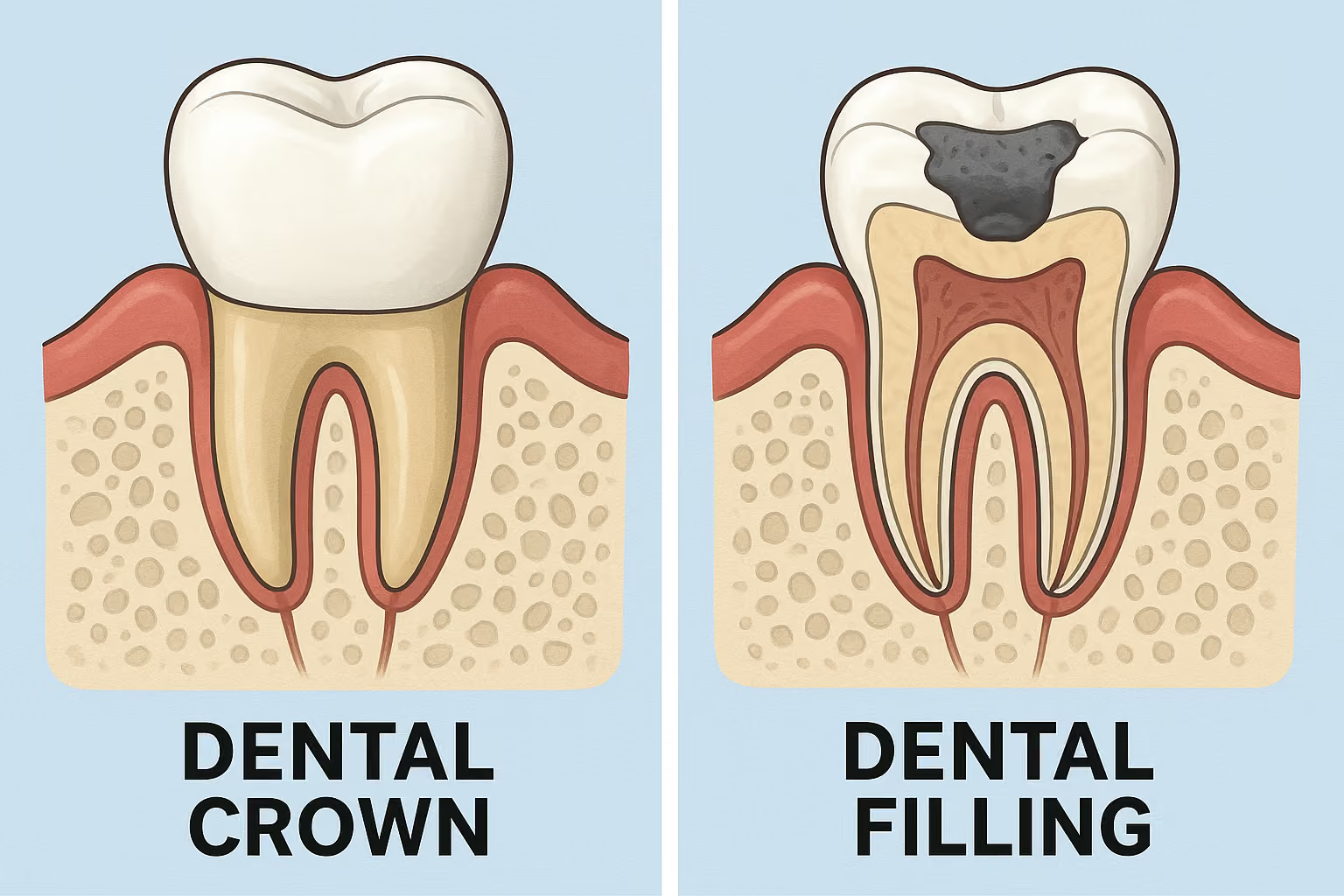
It's easy to get confused when your dentist recommends a restorative procedure. You might hear terms like "filling" and "crown" and wonder what the difference is, or why one is being recommended over the other. At Maple Park Dental, our goal is to help you understand your treatment options so you can feel confident in your dental care. While both crowns and fillings are used to repair damaged teeth, they serve different purposes and are used for different degrees of damage.
What is a Dental Filling?
A dental filling is a common, direct restoration used to repair a tooth with minor damage, typically caused by a cavity. Think of a filling as patching a small hole in a road. The procedure is straightforward and can usually be completed in a single visit. After numbing the area, your dentist will carefully remove the decayed portion of the tooth. Once the area is clean, the space is filled with a durable material to restore the tooth's function and prevent further decay.The most common filling materials today are composite resin (a tooth-colored material) and amalgam (a silver-colored material). Composite fillings are popular because they can be matched to the color of your natural teeth, making them a great option for visible areas. Fillings are a fantastic solution for small cavities and minor chips, as they preserve most of your natural tooth structure.
What is a Dental Crown?
A dental crown, often referred to as a “cap,” is a more comprehensive, indirect restoration. Unlike a filling that repairs a small part of a tooth, a crown is a custom-made prosthetic that covers the entire visible portion of a tooth, from the gum line up. Crowns are a powerful solution when a tooth is severely compromised and needs structural reinforcement to survive. They are the "heavy-duty" restoration for teeth that have lost a significant amount of their structure.A dentist may recommend a crown in several situations:
- A tooth with a very large cavity where there isn’t enough natural tooth structure left to support a filling.
- A cracked or broken tooth that needs to be held together to prevent further fracturing.
- A tooth that has undergone a root canal, as the procedure can make the tooth brittle and susceptible to breaking.
- To cover a badly shaped or discolored tooth for cosmetic reasons.
- To anchor a dental bridge.
The crown procedure typically requires two visits. During the first appointment, your dentist will prepare the tooth by reshaping it to ensure the crown fits perfectly. An impression is then taken and sent to a dental lab, where your custom crown is crafted. A temporary crown is placed to protect your tooth in the meantime. At your second appointment, the permanent crown is cemented into place, restoring the tooth’s strength, function, and appearance.
Crown vs. Filling: A Quick Comparison
FeatureDental FillingDental CrownExtent of DamageMinor to moderate decay or chipsExtensive damage, cracks, or post-root canal ProcedureDirect restoration, usually one visitIndirect restoration, typically two visits CoverageFills a hole within the toothCovers the entire tooth like a cap CostMore affordableMore of an investment due to materials and process LongevitySeveral years (5-10+)A decade or more with proper care (10-15+)
How Does Your Dentist Decide Which Is Best?
Choosing between a crown and a filling is not a matter of preference; it's a decision based on the specific condition of your tooth. Your dentist will conduct a thorough examination, often using X-rays, to assess the extent of the damage. They will look at the size and location of the cavity or fracture, and the amount of healthy tooth structure that remains. If a tooth is so compromised that a filling would likely fail or cause the tooth to break, a crown is the stronger, more durable, and ultimately more protective choice.According to the American Dental Association, a crown is recommended when a tooth requires a large filling but “there isn't enough tooth remaining to hold the filling.” While crowns are a greater initial investment, they are often the most cost-effective solution in the long run by preventing more serious and expensive problems down the road.
Ready to Restore Your Smile?
Whether you need a filling, a crown, or just a routine check-up, our team at Maple Park Dental is here to help. We are dedicated to providing the finest dental care using the latest technology to ensure your visit is quick, comfortable, and even enjoyable. If you have a tooth that is bothering you, don't wait. Contact us today to schedule an appointment. We'll work with you to find the best solution to get your smile back on track.
Share this post
Explore more posts
When Should I Replace My Toothbrush? The Science Behind the 3-Month Rule
At Maple Park Dental, we emphasize that a toothbrush is a precision tool for your oral health. While it might seem like a small detail in your daily routine...

The Power of Prevention: Everything You Need to Know About Professional Dental Cleanings
A trip to the dentist is far more than a routine chore; it is a critical investment in your long-term physical health. At Maple Park Dental, we believe that...
Fluoride vs. Non-Fluoride: Debunking the Top 3 Toothpaste Myths
Staring at the toothpaste aisle can feel more like a chemistry exam than a quick errand. With so much conflicting advice online, it’s difficult to separate...